Home / Articles
Asian Eyelid Surgery: What Makes It Unique?
Home / Articles
Asian Eyelid Surgery: What Makes It Unique?
Asian eyelid surgery is often discussed as if it were a single, simple procedure. In reality, it is one of the most nuanced areas of aesthetic surgery — one that sits at the intersection of anatomy, identity, and long-term facial harmony.
For most patients, the central concern is not technical terminology. It is deeply personal:
Asian eyelid surgery is not a variation of Western blepharoplasty. It is a distinct surgical field developed in response to different eyelid anatomy and aesthetic priorities.
When Western approaches are applied without modification, the results can feel unnatural. Creases may be too deep, eyelids may appear hollow, or expressions may feel tense or unfamiliar. Even when the surgery is technically “successful,” patients may feel emotionally disconnected from the outcome.
Asian eyelid surgery requires a philosophy centered on harmony. The goal is not larger eyes, but eyes that fit the face — now and in the future.
Every eyelid surgery outcome is determined by anatomy. Understanding Asian eyelid structure is not optional — it is essential.
Common anatomical characteristics include:
A low or absent supratarsal crease
Thicker eyelid skin and soft tissue
A stronger orbital septum
Evenly distributed upper eyelid fat
Different attachment of the levator muscle
These features create the smooth, gentle contour associated with Asian eyes. They also mean that crease formation behaves differently than in Caucasian eyelids.
If a crease is placed too high or fixed too rigidly, eyelid movement can become unnatural. Over time, this may lead to stiffness, visible scarring, or a look that ages poorly.
A long-standing misconception is that double eyelid surgery exists to make Asian eyes look Western. Modern Asian eyelid surgery rejects this idea entirely.
A natural double eyelid crease:
Appears softly when the eyes are open
Relaxes naturally when the eyes are closed
Preserves the original eye shape
Supports expression rather than dominating it
From a clinical standpoint, crease design must consider eye length, brow position, facial proportions, and long-term aging. A crease that looks attractive on its own may still feel wrong if it disrupts overall balance.
At Seoyon, facial harmony is often compared to music. Loud notes attract attention, but harmony creates comfort. The best results are the ones people feel — not the ones they immediately notice.
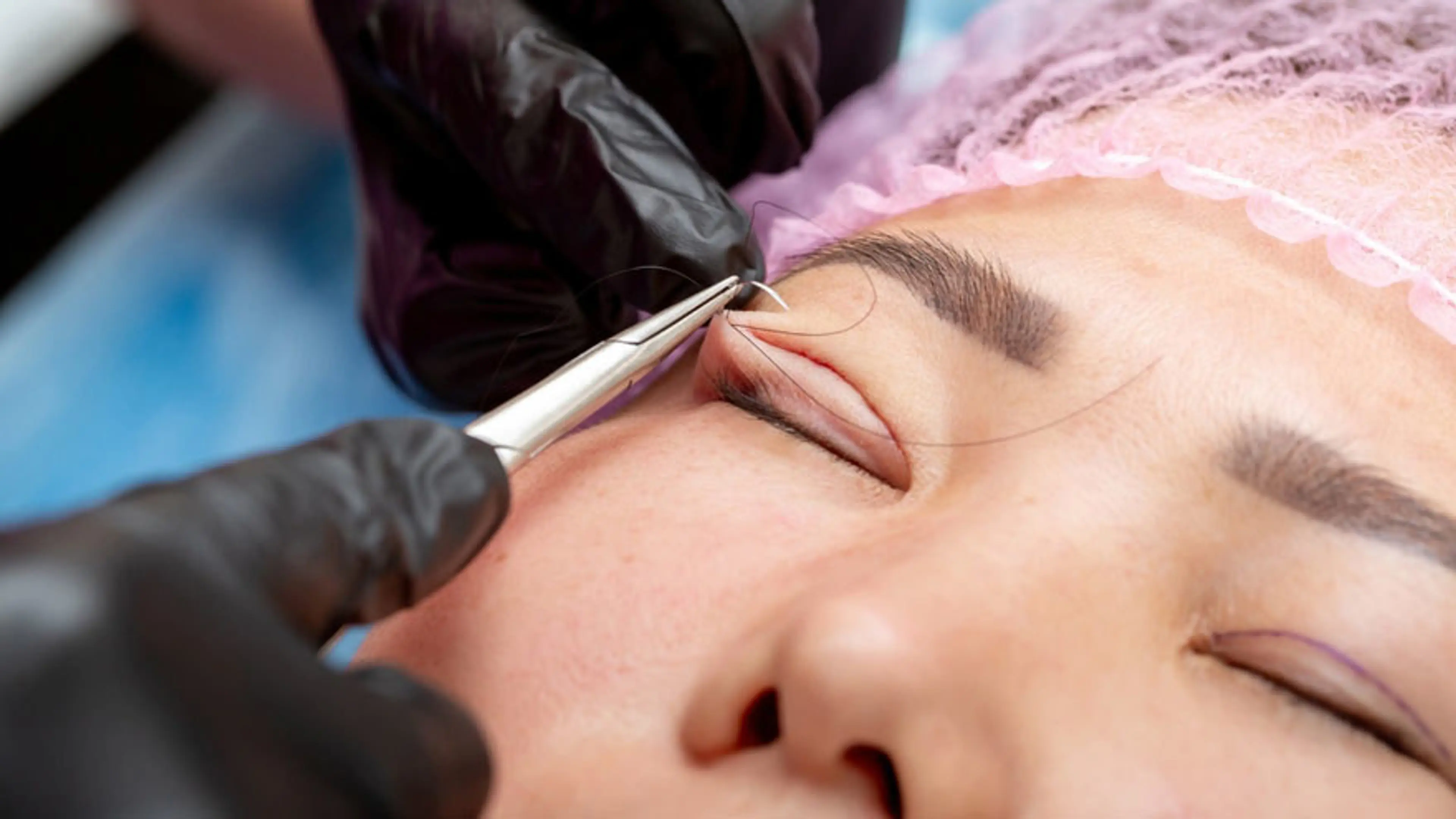
These techniques use sutures to create a crease without a full incision. They are best suited for patients with thin skin, minimal fat, and strong eyelid-opening muscles. Recovery is usually faster, and scarring is minimal. However, in thicker eyelids or cases involving muscle weakness, the crease may loosen over time.
Incisional techniques allow for precise adjustment of skin, fat, and muscle. They are often necessary for thicker eyelids, excess skin, asymmetry, ptosis correction, or revision cases. When performed conservatively, incisional surgery can still look soft and natural. When performed aggressively, it may feel stiff or overdefined.
The technique itself does not determine success. Surgical judgment does.
Ptosis can cause the eyes to look sleepy, uneven, or smaller. Patients often compensate by raising their eyebrows, leading to forehead tension or fatigue. In these cases, creating a crease alone does not solve the underlying issue.
Ptosis in Asian patients is often subtle and easily missed. Correcting it requires precise adjustment of the levator muscle while maintaining natural movement. Overcorrection can produce a startled appearance; undercorrection leaves the eyes feeling heavy.
When treated properly, patients frequently report not just visual improvement, but physical relief — lighter eyes and reduced forehead strain.
Eyelid revision surgery is more common than many patients expect. At Seoyon, a large number of consultations involve patients who have already had surgery elsewhere.
Common reasons include:
Creases that are too high
Worsening asymmetry over time
Visible scarring or indentation
Stiff or unnatural eyelid movement
Loss of original facial identity
Revision surgery is technically complex because scar tissue alters normal anatomy. It is also emotionally sensitive. Many patients approach revision cautiously after losing confidence from their first procedure.
Asian eyelid surgery is never purely cosmetic. It often intersects with identity, confidence, and how patients are perceived socially and professionally.
Some patients want to look less tired at work. Others want improvement subtle enough that family members cannot pinpoint a change. Many simply want their appearance to align with how they feel internally.
Fear of looking “fake” is one of the most common concerns — and it is valid. A responsible surgeon does not push surgery when hesitation exists. In some cases, the most ethical recommendation is to delay, reduce, or avoid surgery entirely.
Trust is built through honesty and restraint, not persuasion.
South Korea is recognized globally for Asian eyelid surgery due to decades of focused experience, high surgical volume, and advanced revision techniques. Surgeons train extensively in Asian-specific anatomy, and cultural aesthetics emphasize balance over exaggeration.
However, experience alone does not guarantee quality. Standards vary widely between clinics.
Seoyon follows a strict one-doctor policy — no delegation and no ghost surgery. From consultation to surgery to recovery, the same surgeon remains responsible. This continuity is especially important in delicate procedures like eyelid surgery, where subtle decisions have lifelong impact.
When Asian eyelid surgery is done well, it does not announce itself. It blends into the face, respects ethnic identity, and ages naturally over time.
If you are considering eyelid surgery or revision surgery, taking the time to understand anatomy, technique, and philosophy can make all the difference.